What are LEDs?
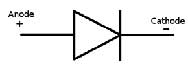
Light Emitting Diode
LEDs, or Light Emitting Diodes (a diode is a device that only allows electricity to flow through it in one direction, which is why LEDs have a positive (+) side and a negative (-) side) are silicon wafers that emit photons (light) when an electrical current passes through it.
What is a Discrete LED?
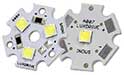
LED Light Module
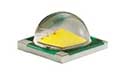
Discrete LED
Discrete LEDs provide only a light source and leave the details of configuration, mounting, polarity, and alignment to the end user.
What is a LED Light Module?
A LED light module is a single or multiple discrete LED(s) configured and mounted to a printed circuit board with polarity connections. LEDdynamics designs and manufacturers LED light modules to help companies get access and easily use the latest LED technology.
What is a LED Light Engine?
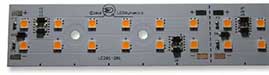
LED Light Engine
A LED light engine is the same as a LED light module with the addition of LED driver electronics. This allows the LED to connect directly to power.
How do LEDs compare to traditional lighting?
The most significant distinction between traditional lighting devices (an incandescent light bulb, fluorescent tube, neon fixture, etc.) and LEDs is that LEDs do not use heat or a gas to generate light. An LED is a ‘Solid State’ device that contains no fragile filament or glass tube, making it an extremely durable and reliable light source that can be used in ways never before possible.
Where are LEDs being used?
The most common uses of LEDs are in consumer electronics and other equipment as indicator lights (the green or red ‘power on’ lights on a VCR or computer monitor).
Only with the introduction of HB (High-Brightness) LEDs and HF (High-Flux) LEDs, have LEDs been considered a “useable light source” for flashlights, accent lighting, signage, general-illumination and other applications.
LEDs are used in applications where long life and reliability is required. Many have been illuminated for 25 years and continue to function. Because LED use much less current than other light sources and run on low voltage DC, they are naturally suited for many battery powered applications. In very cold temperatures, LEDs turn on instantly while some fluorescents would fail to light. LEDs also generate smaller amounts of heat than their incandescent (filament) counter parts.
How do I choose the right LED?
To choose the right LED for your product or application, you should have a general understanding and knowledge of the different types of LEDs, their typical applications, and their differences in electrical, physical, optical and thermal characteristics. There are many different types and brands of LEDs on the market today and finding the LED that best suits your particular project requirements is essential for achieving the maximum performance, longevity and overall success of your LED product or application.
The first consideration when choosing an LED is to determine if a particular wavelength or color is desired for the application. Determining a specific color range (wavelength) or temperature range (degrees kelvin) of light to be used will significantly narrow the range of available LEDs that are suitable, and that can be considered for the application.
Next, the type of available power and drivability of the LED needs to be determined. LEDs of different wavelength (color) and type have different power requirements, electrical characteristics and thermal management requirements. The type of available power is a major factor in determining the best LED or LED circuit configuration for the application. In higher voltage applications, it may be more suitable to use many smaller LEDs, in place of one or two larger LEDs, to reduce the amount of power and heat that needs to be regulated.
Refer to the LED manufacturers’ specification documentation for information on electrical, physical, optical and thermal characteristics in order to become familiar with the LEDs that are being considered for the application, or contact LEDdynamics support for more information on how to choose the right LED and driver for the job.


Understanding LEDs and How to Choose the Right One
/in Education /by Brooke SaultWhat are LEDs?
Light Emitting Diode
LEDs, or Light Emitting Diodes (a diode is a device that only allows electricity to flow through it in one direction, which is why LEDs have a positive (+) side and a negative (-) side) are silicon wafers that emit photons (light) when an electrical current passes through it.
What is a Discrete LED?
LED Light Module
Discrete LED
Discrete LEDs provide only a light source and leave the details of configuration, mounting, polarity, and alignment to the end user.
What is a LED Light Module?
A LED light module is a single or multiple discrete LED(s) configured and mounted to a printed circuit board with polarity connections. LEDdynamics designs and manufacturers LED light modules to help companies get access and easily use the latest LED technology.
What is a LED Light Engine?
LED Light Engine
A LED light engine is the same as a LED light module with the addition of LED driver electronics. This allows the LED to connect directly to power.
How do LEDs compare to traditional lighting?
The most significant distinction between traditional lighting devices (an incandescent light bulb, fluorescent tube, neon fixture, etc.) and LEDs is that LEDs do not use heat or a gas to generate light. An LED is a ‘Solid State’ device that contains no fragile filament or glass tube, making it an extremely durable and reliable light source that can be used in ways never before possible.
Where are LEDs being used?
The most common uses of LEDs are in consumer electronics and other equipment as indicator lights (the green or red ‘power on’ lights on a VCR or computer monitor).
Only with the introduction of HB (High-Brightness) LEDs and HF (High-Flux) LEDs, have LEDs been considered a “useable light source” for flashlights, accent lighting, signage, general-illumination and other applications.
LEDs are used in applications where long life and reliability is required. Many have been illuminated for 25 years and continue to function. Because LED use much less current than other light sources and run on low voltage DC, they are naturally suited for many battery powered applications. In very cold temperatures, LEDs turn on instantly while some fluorescents would fail to light. LEDs also generate smaller amounts of heat than their incandescent (filament) counter parts.
How do I choose the right LED?
To choose the right LED for your product or application, you should have a general understanding and knowledge of the different types of LEDs, their typical applications, and their differences in electrical, physical, optical and thermal characteristics. There are many different types and brands of LEDs on the market today and finding the LED that best suits your particular project requirements is essential for achieving the maximum performance, longevity and overall success of your LED product or application.
The first consideration when choosing an LED is to determine if a particular wavelength or color is desired for the application. Determining a specific color range (wavelength) or temperature range (degrees kelvin) of light to be used will significantly narrow the range of available LEDs that are suitable, and that can be considered for the application.
Next, the type of available power and drivability of the LED needs to be determined. LEDs of different wavelength (color) and type have different power requirements, electrical characteristics and thermal management requirements. The type of available power is a major factor in determining the best LED or LED circuit configuration for the application. In higher voltage applications, it may be more suitable to use many smaller LEDs, in place of one or two larger LEDs, to reduce the amount of power and heat that needs to be regulated.
Refer to the LED manufacturers’ specification documentation for information on electrical, physical, optical and thermal characteristics in order to become familiar with the LEDs that are being considered for the application, or contact LEDdynamics support for more information on how to choose the right LED and driver for the job.
What is and How to Avoid Thermal Runaway
/in Driver Design, Education /by Brooke SaultWhat is Thermal Runaway?
All semiconductors, including LEDs, generate heat as a by-product of their operation. The more electrical current the device uses, the greater the amount of heat that needs to be dissipated. Provided there is adequate thermal management, the device will not exceed its maximum operating temperature.
If the provisions to remove heat are insufficient, overheating will occur. When this happens, the ability to conduct electricity increases, generating even more heat. The increased heat output results in an even higher temperature, increasing the ability to conduct current still further. This process, known as thermal runaway, will continue until the device self-destructs.
How to Avoid Thermal Runaway
Thermal runaway is controlled with the use of a constant current LED driver.
Blue Highway Funds LEDdynamics
/in News /by Scott McGrathDecember 10, 2019
RANDOLPH, Vermont – Blue Highway Capital, of Boston MA and Philadelphia PA, announces that it has placed a first institutional investment into LEDdynamics Inc., of Randolph VT. The funds enable the company to undertake planned expansion, with additional milestone investments anticipated in 2020.
LEDdynamics to attend Strategies in Light
/in Events /by Scott McGrathFeb 11 – 13th, 2020
San Diego Convention Center | San Diego, CA
Booth 733
LEDdynamics will be attending 2020 Strategies in Light in San Diego, CA. This 3-day event will provide LEDdynamics the opportunity to showcase their latest product offering to the LED marketplace and to converse with our channel partners, customers and new prospects.
LEDdynamics moves to its new headquarters
/in News /by Scott McGrathJune 6th, 2019
Governor Phil Scott, public officials, business owners and guests participated in a June 5th Ribbon-Cutting ceremony at 296 Beanville Road in Randolph with LEDdynamics (LED) and Green Mountain Economic Development Corporation…
Khatod PL1672 Series Compatible Light Module introduced by LEDdynamics, Inc.
/in Light Module Design, News /by Brooke SaultMay 21, 2019
LEDdynamics, Inc. announces the introduction of the Centaurus J006 Light Module.
The Centaurus J006 high-power light module was designed to interface with the Khatod PL1672 Series optics and can be equipped with CREE’s XP-E2 and XP-G3 Series LED’s.
Sales Associate
/in Careers /by Brooke SaultLEDdynamics is seeking a Sales Associate to join our team. As a Sales Associate, you will play a crucial role in providing customer service by assisting customers with inquiries via phone and email.
Product Hightlight – MiniPuck F004
/in Driver Design, News /by Brooke SaultJanuary 16, 2019
LEDdynamics Introduces a Miniature Low Voltage DC/DC LED Driver. Today LDI announces the full release of the MiniPuck F004 low voltage LED driver to their extensive product portfolio.
LEDdynamics New Website Launch
/in News /by Brooke SaultJanuary 17, 2019
Today LEDdynamics, Inc. launched their new website to mark the next phase of the company’s growth and re-branding. Guests will notice a clean and crisp layout that is easy to read and allows visitors to swiftly access desired information with a minimal amount of effort.
Lightfair International 2019
/in Events /by Brooke SaultMay 21 – 23rd, 2019
Philadelphia, PA
An exhibitor for seventeen years, LEDdynamics will be returning to exhibit at the 2019 Lightfair International in Philadelphia, PA. Please come by and visit us at booth 100.